








The D-Day Landing Beaches designated as a UNESCO World Heritage Site
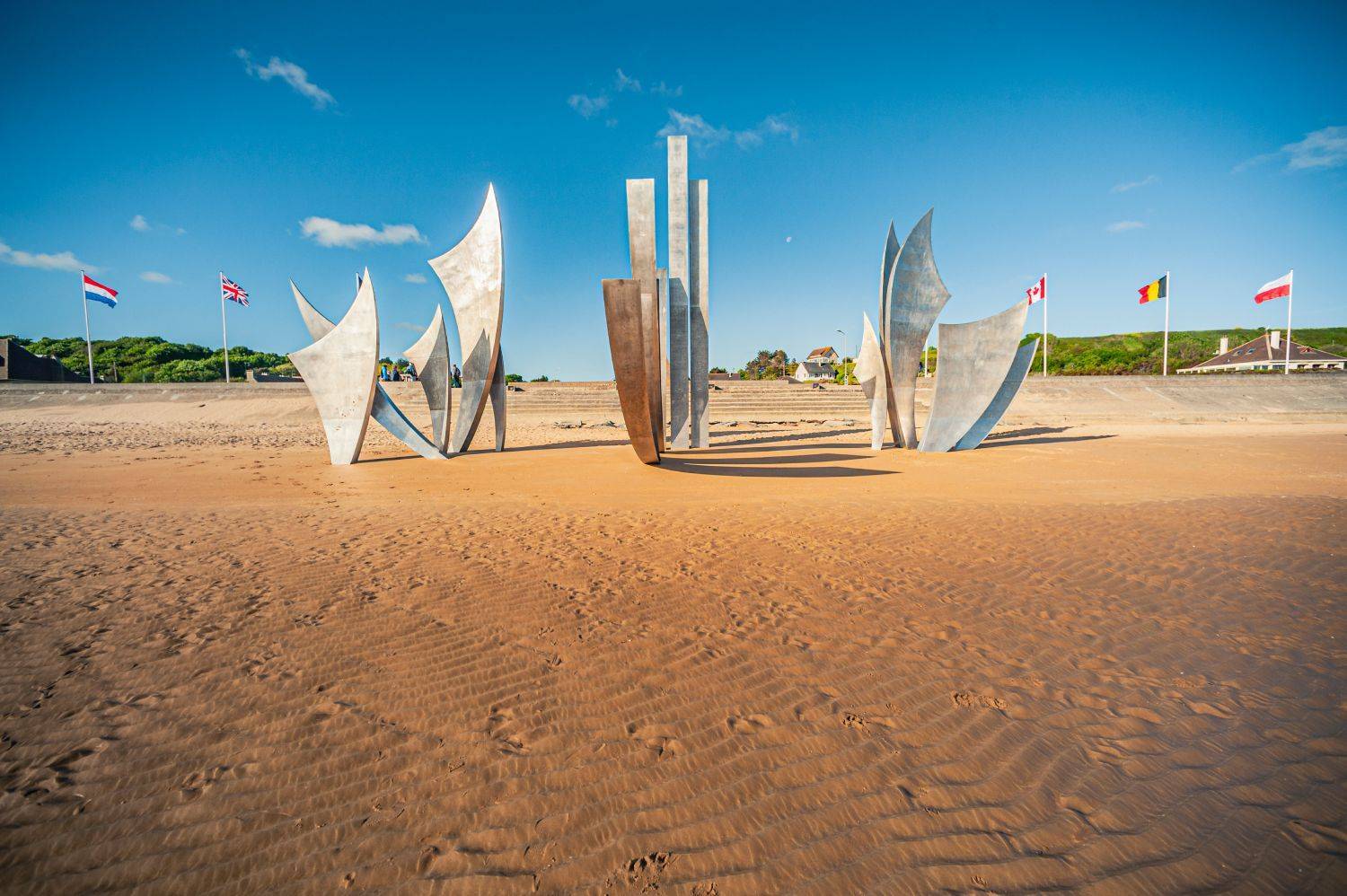


Since July 26, 2026, the Normandy D-Day Landing Beaches have been inscribed on the UNESCO World Heritage List.
The inscription of the Landing Beaches as a UNESCO World Heritage site goes beyond the mere preservation of military remains.
This long-awaited recognition nearly twenty years in the making highlights the universal significance of these sites, which are now associated with the values of peace and freedom.
The area designated by UNESCO stretches for approximately 80 kilometers along the Normandy coast, from Ravenoville to Ouistreham.
It encompasses Utah Beach, Omaha Beach, Gold Beach, Juno Beach, and Sword Beach, as well as Pointe du Hoc—the sixth assault site of the D-Day landings.
Remains of the Atlantic Wall and traces of the battlefield are still visible today.
Several major memorial sites complement this historic landscape, including:
To fully grasp the significance of the D-Day landings, stop by the Caen Memorial.
A leading museum in Normandy, it uses its collections and immersive exhibits to trace the origins of the conflict, the events of June 6, 1944, and the liberation of Europe.
It also offers guided tours to the nearby beaches, allowing visitors to experience this history right where it unfolded.
Caen is a particularly convenient starting point for exploring the D-Day Landing Beaches and major memorial sites in Normandy.
Several tourist destinations such as Bayeux, Mont-Saint-Michel, and Arromanches are within an hour’s reach.
Stay at a 4-star hotel in Caen’s city center, close to the Ducal Castle, shops, and restaurants.
After a day of sightseeing, relax in one of our modern, air-conditioned rooms.
In the morning, enjoy a buffet breakfast, along with access to a bar, room service, and parking facilities.
You also have the option to rent an electric bike between May 1st and October 1st.
The inscription of the Landing Beaches as a UNESCO World Heritage site goes beyond the mere preservation of military remains.
This long-awaited recognition nearly twenty years in the making highlights the universal significance of these sites, which are now associated with the values of peace and freedom.
The Landing Beaches Inscribed: A Historic Recognition
80 Kilometers of Coastline Steeped in History
The area designated by UNESCO stretches for approximately 80 kilometers along the Normandy coast, from Ravenoville to Ouistreham.
It encompasses Utah Beach, Omaha Beach, Gold Beach, Juno Beach, and Sword Beach, as well as Pointe du Hoc—the sixth assault site of the D-Day landings.
Remains of the Atlantic Wall and traces of the battlefield are still visible today.
Several major memorial sites complement this historic landscape, including:
- the Longues-sur-Mer battery;
- the Mulberry B artificial harbor;
- the American Cemetery at Colleville-sur-Mer;
- the British Military Cemetery in Bayeux.
The Caen Memorial: A Gateway to This History
To fully grasp the significance of the D-Day landings, stop by the Caen Memorial.
A leading museum in Normandy, it uses its collections and immersive exhibits to trace the origins of the conflict, the events of June 6, 1944, and the liberation of Europe.
It also offers guided tours to the nearby beaches, allowing visitors to experience this history right where it unfolded.
Where to stay in Caen when visiting the Landing Beaches?
Caen is a particularly convenient starting point for exploring the D-Day Landing Beaches and major memorial sites in Normandy.
Several tourist destinations such as Bayeux, Mont-Saint-Michel, and Arromanches are within an hour’s reach.
Stay at a 4-star hotel in Caen’s city center, close to the Ducal Castle, shops, and restaurants.
After a day of sightseeing, relax in one of our modern, air-conditioned rooms.
In the morning, enjoy a buffet breakfast, along with access to a bar, room service, and parking facilities.
You also have the option to rent an electric bike between May 1st and October 1st.